A Universe in a Grain of Sand: Discovering Hidden Worlds Through Underwater Photography
- Ariel Chu
- Jul 26, 2025
- 3 min read

A Curious, Bold, Innovative, and Dedicated Underwater Photographer
Eduardo has been an inspiring scuba mentor to me over the past seven years. Funny enough, we are yet to dive together. We first met while playing volleyball, and since we both shared a passion for diving, we quickly became friends. Back then, I had only recently earned my Advanced Open Water certification and was still a rookie. He not only opened my eyes to the fascinating underwater world but also shared with me deep insights about life and passion.

He’s the kind of person who takes time to memorize an entire fish identification guide of Indo-Pacific ocean, fish behavior and habits to better approach them for photography, and master every technical aspect of his camera setup and post-processing work. The photos are truly stunning. Together with his wife, Jacque, they make an incredible technical diving duo, uncovering underwater creatures that often go unnoticed. Sometimes, these creatures are smaller than a grain of sand, while other times, he captures unique moments of interaction between marine life—like a mother fish hiding her babies in her mouth, or a frogfish yawning. His images are so vivid and dynamic that they feel like scenes straight out of National Geographic.

The Gear Behind the Craft
Traveling with all those underwater photography equipment is a testament to dedication. His luggage is filled with heavy waterproof camera housings, various lenses tailored for different shooting scenarios, and two strobes that are almost (or more) as expensive as the camera itself. And that’s not even counting the wetsuits, fins, and other dive gear that take up the remaining space. Each trip comes with significant costs and logistical challenges—not to mention the time and effort needed for regular maintenance and care of all the gear.

Diving Skills and Photography
In the vastness of the ocean, encounters with marine life are often unpredictable. Whether it’s the sleek and swift movements of a shark, the graceful wingspan of a manta ray, or the intricate details of a tiny shrimp or crab, knowing how to approach an animal without startling it is an art in itself. On top of that, there’s the challenge of quickly adjusting camera settings, setting up lighting, and maintaining perfect buoyancy—all while ensuring you don’t accidentally drift up or sink down during the process. For aspiring underwater photographers, Eduardo recommends The Underwater Photographer by Martin Edge, a comprehensive guide to mastering the craft.

Innovation and Adaptation During the Pandemic
When the pandemic brought diving trips to a halt, Eduardo pivoted to land-based photography, exploring portraits, insects, cityscapes, and studio work. Those knowledge and skills —understanding light, composition, proficiency in post-production tools, and storytelling—proved to be just as effective on land as underwater. Underwater photographers often rely on post-processing software to restore the natural colors of their photos. As you dive deeper, light diminishes, and red wavelengths are absorbed first, leaving even the most vibrant corals and fish looking muted in shades of blue and green. Some photographers use red filters on their lenses, while others adjust white balance and colors during editing to bring back the vivid hues.

The Philosophy Behind Photography
What I’ve learned from Eduardo is that passion is fueled by consistent patience, curiosity, and the willingness to put in the work. It’s about spending hours reading books and watching videos, studying, trying out and asking questions. Loving something means there are countless actions you can take to nurture that passion—and it often requires a boldness to dive deep into it, both figuratively and literally.

Over the past decade, Eduardo has explored countless seas across the Indo-Pacific, capturing vibrant and life-filled moments with his lens. The dedication to both the ocean and underwater photography transforms fleeting moments into dazzling bursts of color and emotion.
What Next?
This year, I finally invested in my first entry-level macro underwater camera, the OM System TG-7. I can’t wait to bring it on my next dive and capture moments. Hopefully we can dive together soon to learn firsthand from his expertise. Until then, look forward to see more of his photography journey, which breaks through geographical boundaries to reveal the hidden beauty of our oceans.
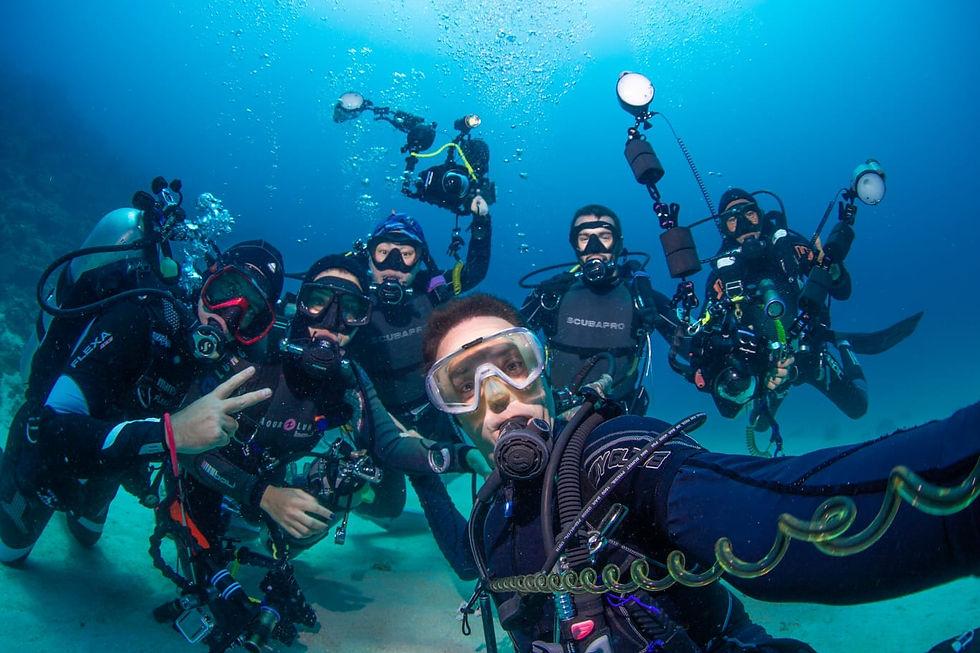
All photos in this article are credit to Eduardo. To see more of his incredible work, check out his Instagram at [@edu.photos]or visit the following link: (https://www.instagram.com/edu.photos).
